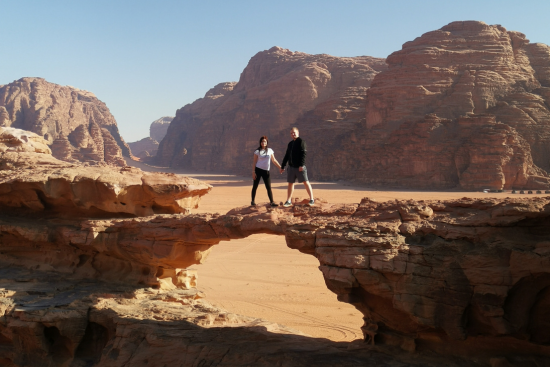
We packed up our suitcase and backpacks and set off for a little journey around the Middle East. We flew from Bangkok to reach, respectively, Bahrain, Kuwait, Egypt and then Jordan. It was important for us to plan our itinerary in Jordan carefully, as we wanted to see as much as possible during our 5-day stay. I assure you: there are many wonderful things to do in Jordan and it’s impossible to get bored there. Our itinerary included Amman, Petra, Wadi Rum and Aqaba. Hope you’ll enjoy our story!
You can check out the map of our route below:

Our complete route looked like this: Thailand → Bahrain → Kuwait → Egypt → Jordan → UAE → Thailand
Where Is Jordan? A Quick Overview
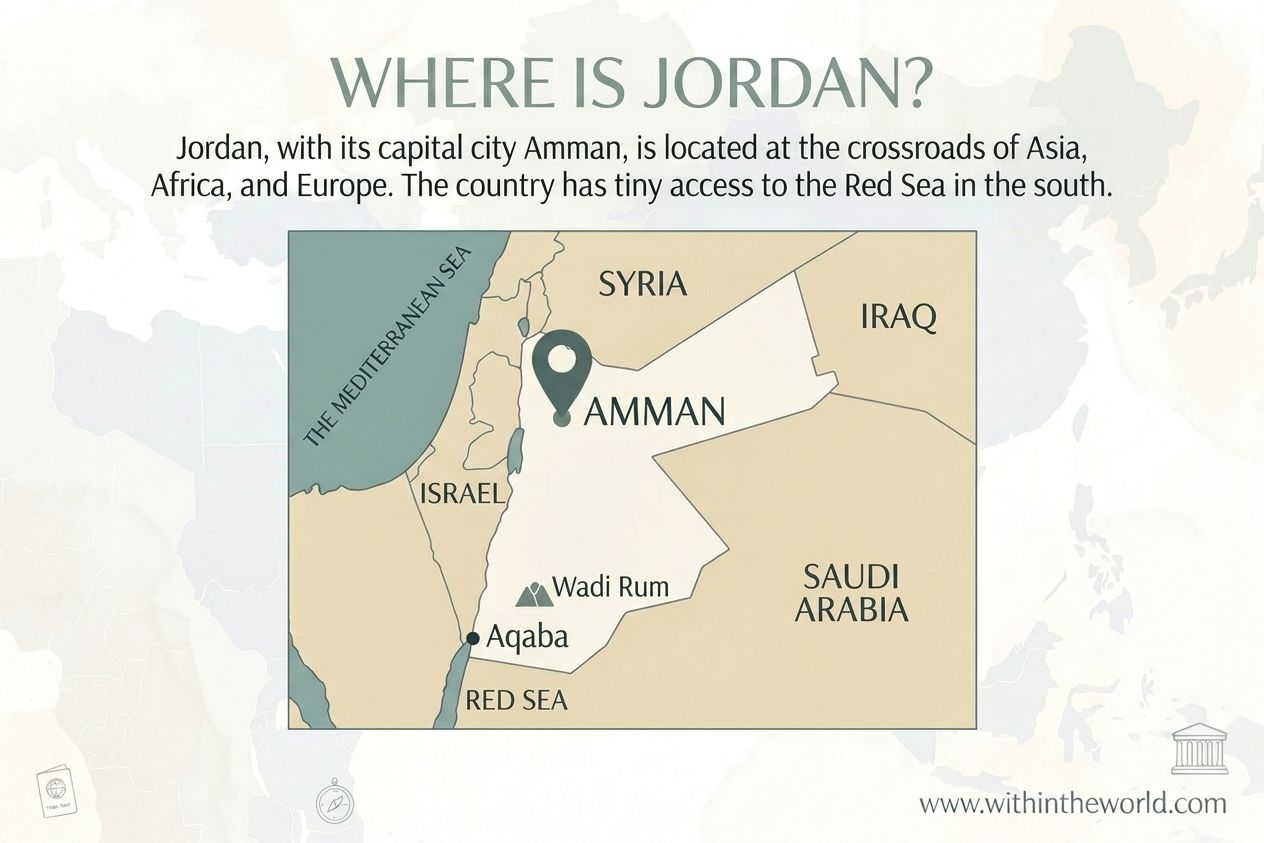
Jordan, with its capital city Amman, is located at the crossroads of Asia, Africa, and Europe. Jordan shares its borders with 5 neighbours: Syria, Iraq, Saudi Arabia, Israel and Palestine (the West Bank). The country has tiny access to the Red Sea in the south.
Is Jordan Worth Visiting? Our First Impressions
Yes, very much! Jordan is super interesting — no matter how long you plan to stay there, it’s impossible to get bored. There are so many things to do in Jordan that it’s more probable you’ll miss something rather than run out of ideas of what to do there. The atmosphere is so unique, and people are kind and helpful. There are many sellers or people offering some kind of service in most places, but they are polite and respectful and not too pushy. We felt safe in Jordan, even in the evenings. I can’t think of any downside of going there. Ok, I know, there is one: no matter how long your trip around Jordan is, at the end it’s very disappointing that you have to leave — you just want more.
Things to Do in Jordan: Our Complete 5-Day Itinerary
Our trip involved staying in Jordan for 5 full days. During our time there we decided on the following things to do in Jordan: our first stop was the capital city, Amman, with the following attractions: Roman Theatre Amman, Amman Citadel and Amman Old Town at night. Our next idea was a day trip to Petra. After that we reached the Wadi Rum desert and spent one night there, and in the end we spent some peaceful time in Aqaba — the coastal town.
Things to Do in Amman — Our 2-Day Experience
What are the best things to do in Amman? Maybe the best idea would be to move there and start living there :) We just enjoyed the city so much and kept asking ourselves: why did we spend only 2 days there? When it comes to the practical side, it’s possible to see the main attractions of the city during such time. So practically I can say: 2 days in Amman would be enough, but we really wouldn’t mind one or two days more just to soak it in, just to be there for the pleasure of being there — that’s how we enjoyed the city.
Roman Theatre Amman — Is It Worth Visiting?
We chose the Roman Theatre in Amman as our very first attraction. The Roman Theatre was built in the 2nd century AD and, with 6,000 seats, it looked really impressive from the bottom. It makes you want to go up immediately, just as we did. It doesn’t take long to get up there, but the steps can be very steep. Later on, it was a bit more difficult to come down. That’s why it’s better to be careful and pick the right shoes for sightseeing — definitely go for comfortable ones. But the views from the top are so worth it! It’s good to take some water, as it’s hot, and take your time there. We just sat on the highest seats in the middle and enjoyed the wonderful view over the Roman Theatre and the Old Town.

The Jordan Folklore Museum & the Museum of Popular Traditions — Roman Theatre Amman
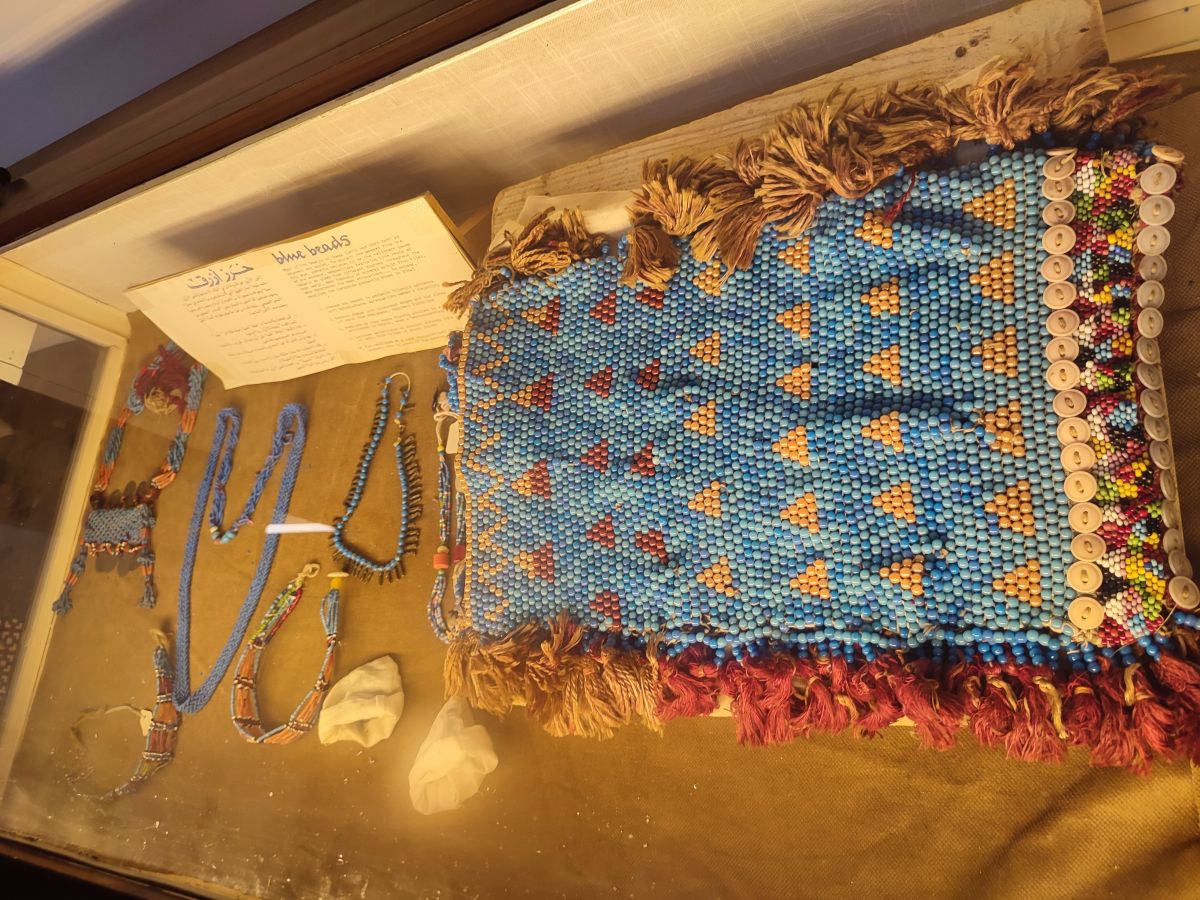
After coming down, don’t just leave! Right inside the structure there are two museums worth visiting. They are small and you don’t need much time for them. Inside these museums, you can see beautifully preserved Jordanian traditional costumes, ancient mosaics and old household items. It’s like a short adventure into the local culture and interesting history. Another plus is that inside the museum you can cool down and take a break from the heat for a little while.
Amman Citadel — What to Expect
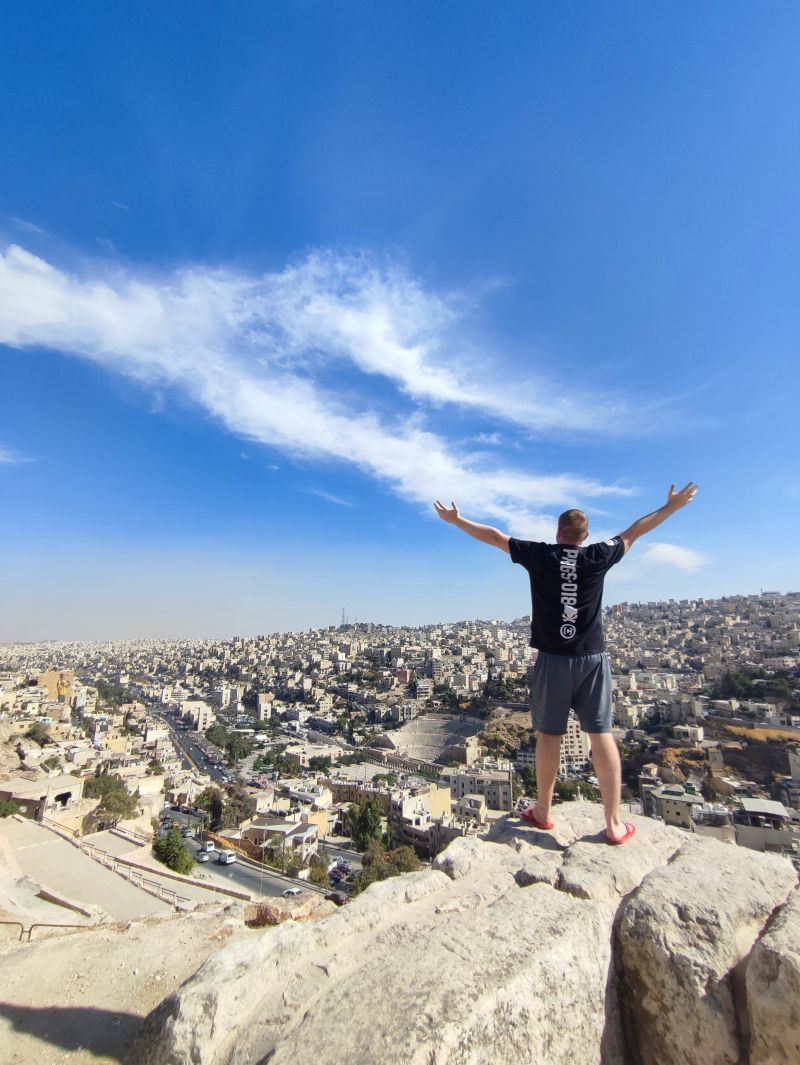
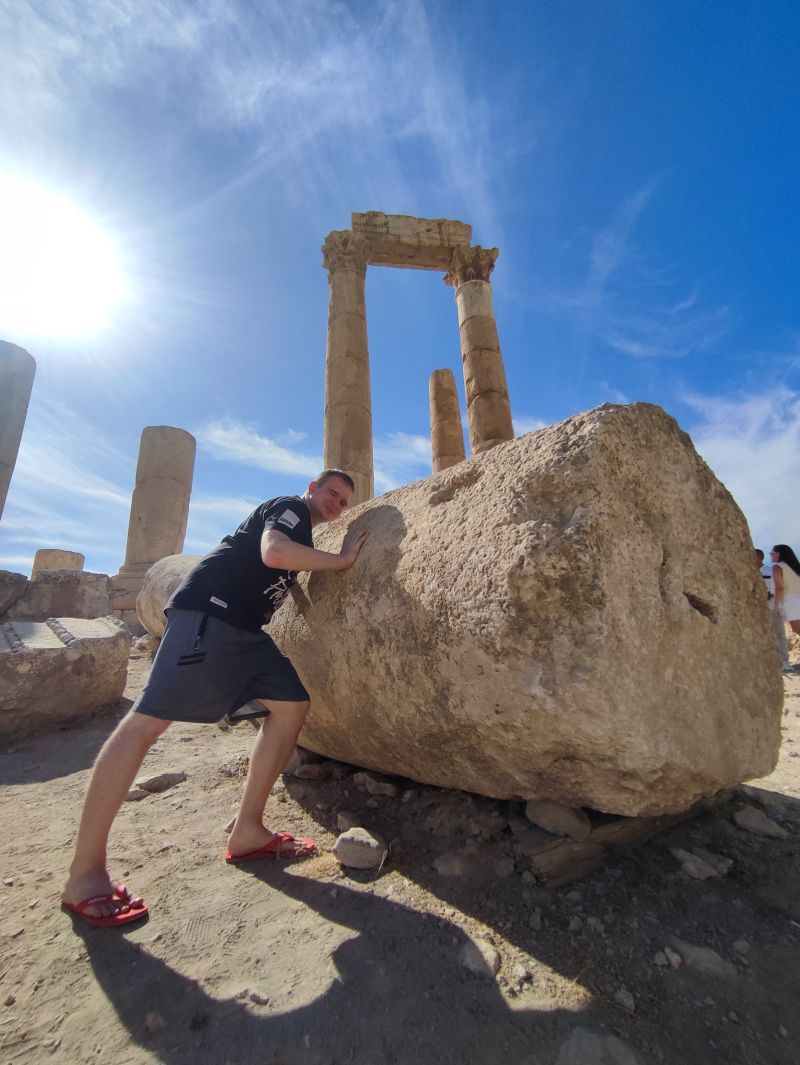
Upon leaving the Roman Theatre, we took a taxi and went to the Amman Citadel. These two attractions look close on the map, but they are separated by a very steep hill. I wouldn’t imagine going there on foot, especially in hot weather, and wouldn’t recommend it to anyone. The taxi ride was short, and right after reaching our destination we first enjoyed the wonderful panoramic views of the city. The architecture is one of a kind, and we could see the Roman Theatre from the top, right below us. Later on, after a short walk, we got to the main complex of Amman Citadel, which consists of archaeological ruins. We could admire the columns of the Roman Temple of Hercules, the remains of a Byzantine Church, and the massive Umayyad Palace. The whole site looks impressive and is a definite must-see when in Amman.
Amman Old Town at Night — Where to Eat and What to See
Walking around Amman Old Town in the evening, when the sun was no longer an obstacle, was a sheer pleasure. There were many quaint souvenir shops inviting us to go inside, which made the souvenir hunt an attraction in itself. The streets felt safe and there were always other people around enjoying the evening walk.
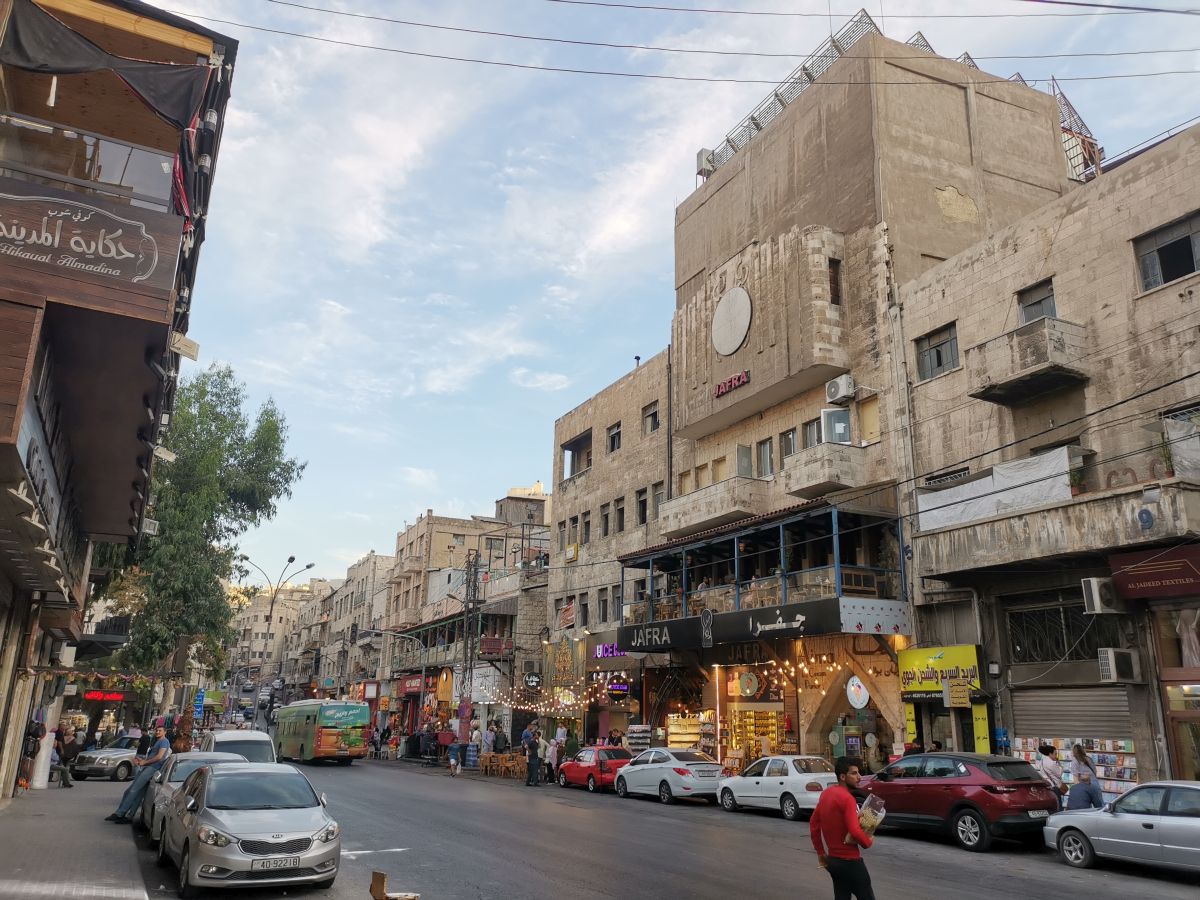
If you are wondering where to eat in Amman — the answer is clear: you should try Jafra Restaurant & Cafe. It’s located in the city center, on the first floor of an old building in Al-Balad. The food is tasty, has many options to choose from, and the best part is the interior. Visiting this restaurant is like immersing yourself in the local atmosphere. The interior design is simply outstanding, with its nostalgic vintage items like old radios, antique books, historic black-and-white photos on the walls, and traditional Arabic drums.

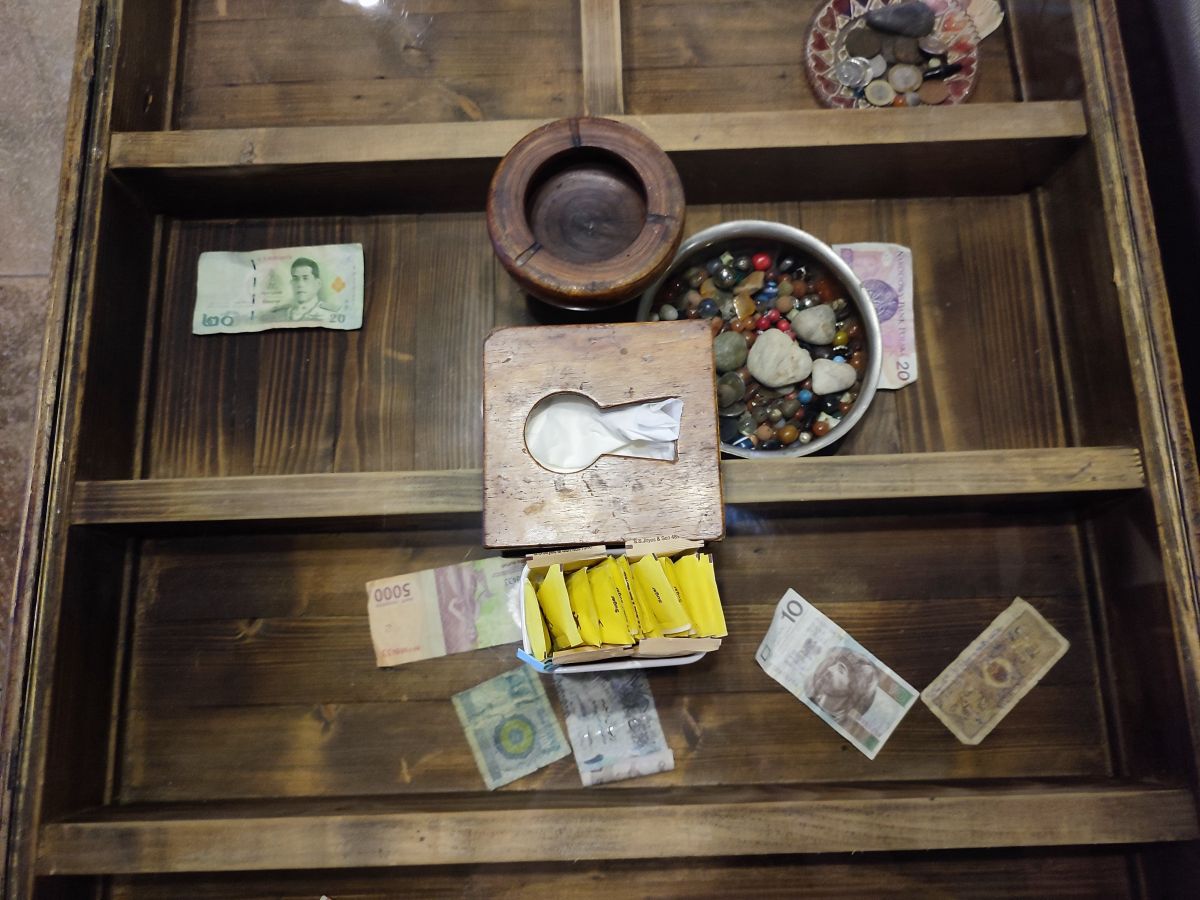
However, we both loved the glass-topped wooden tables the most. Underneath the transparent glass, the tables are filled with banknotes from all over the world, left behind by travelers. We could even find Polish zloty there — our national currency. It always brings a smile to find a piece of your home somewhere :) There is also shisha served at every single table, and we noticed that especially locals, but also some tourists, used it, so the sweet scent of it was filling the entire restaurant.
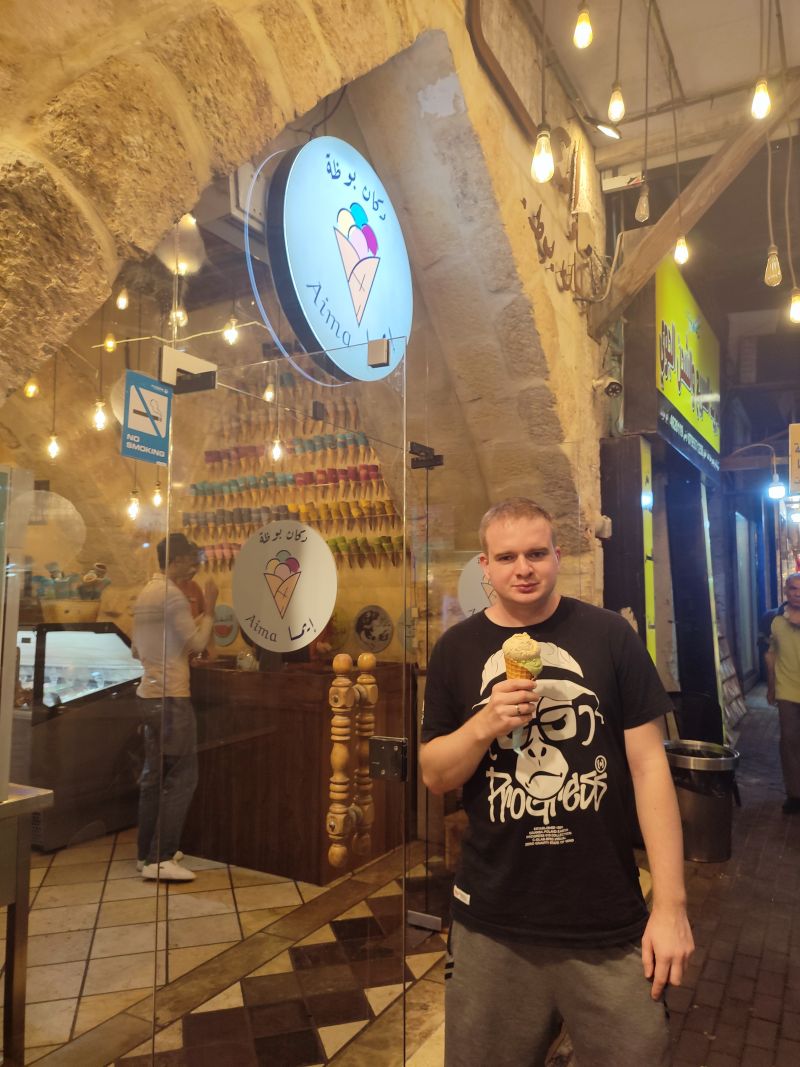
Another place worth visiting is Aima Ice Cream Restaurant, serving delicious ice creams. This place looks incredible and would be a paradise for kids. But be careful — once you go inside, it’s hard to resist :) The colorful cones look amazing and are even used as wall decoration. There is a great choice of ice creams, but I can say that the Arabic one was definitely worth it!
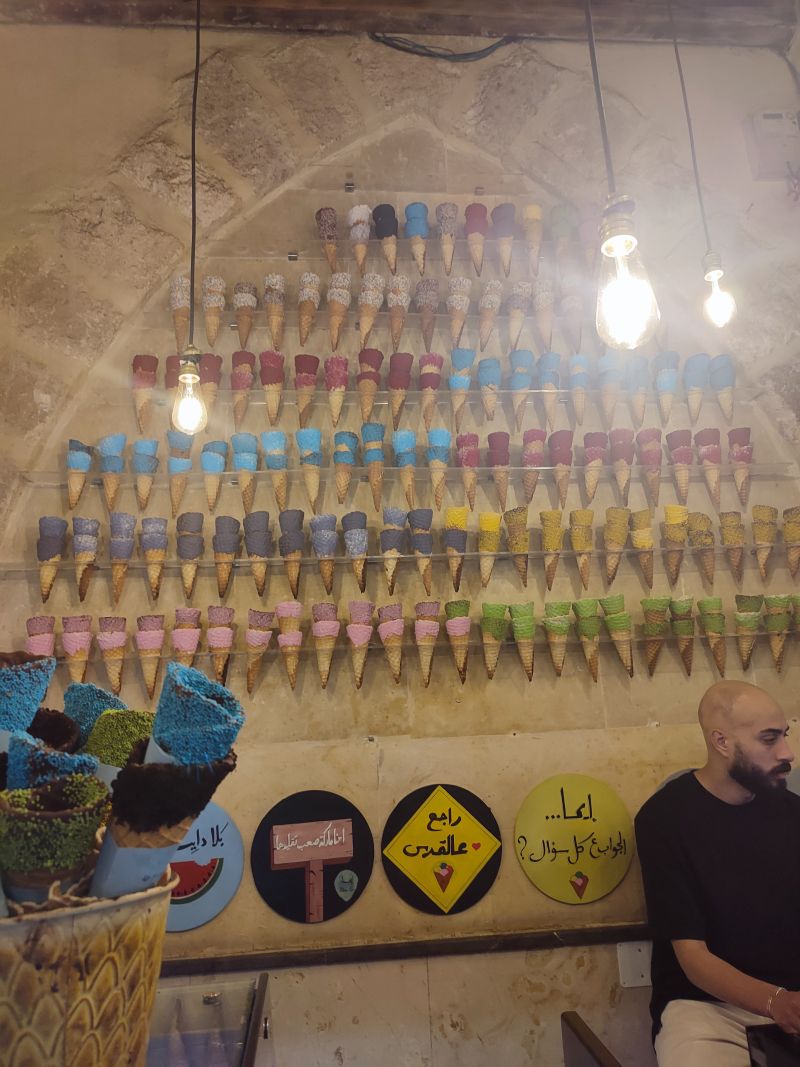
Our Hotel in Amman — Rooftop Breakfast With a View
We booked a budget option — The Boutique Hotel Amman — and we can highly recommend it. The room was small, but it felt cozy and clean. The location was perfect — right in the city center, so in the evening we could just go out and enjoy Amman Old Town. But even better was that we could enjoy the view of the Old Town during our breakfast on the rooftop. The food was simple, without so much choice, but tasty. It was a nice place to sit and take our time while enjoying the views.

Day Trip to Petra From Amman — Everything You Need to Know
We organised our car trip and booked it with a driver even before coming to Jordan. It’s possible to find someone earlier, but it’s actually not necessary — there are many locals offering this kind of service, so it’s easy to discuss the details and book such a trip with most taxi drivers in Amman. We set off from our hotel in the morning, took a car ride (about 3 hours) to get to Petra, and arrived a bit before 11am.
Important Tip: Instead of buying single tickets at the gate, it’s much more worthwhile to purchase the official Jordan Pass online before the trip. It costs 70 JOD (around 98 USD) and includes your tourist visa fee (about 40 JOD, waived if you stay at least 3 nights) plus free entry to Petra and 40 other attractions in the country.
I assume it’s worth staying in Petra for a night, but we went there only for one day and think it was enough for us. We managed to see what we planned, our experience felt complete, and we were happy with our sightseeing.
Petra Jordan — The Treasury (Al-Khazneh) and Beyond
First we passed the ticket control, and then our walk began. There’s a bit of walking there, so at the beginning I again recommend wearing comfortable shoes, not flip flops or anything like that. Don’t forget to take some water with you for this walk, and any protection from the sun can be useful too.
At the beginning, the walk goes through Bab Al-Siq — the first section under the open sun. But very soon we reached The Siq, where the landscape changed completely — we were surrounded by natural rock formations reaching up to 80 m high. It’s like a natural narrow labyrinth, and the shapes of these cliffs are amazing. This place is breathtaking — it’s easier to walk as the canyon walls provide more shade. It felt as if we were visiting another planet, and the colors of the rocks were beautiful, from deep pink through intense brown to golden orange.
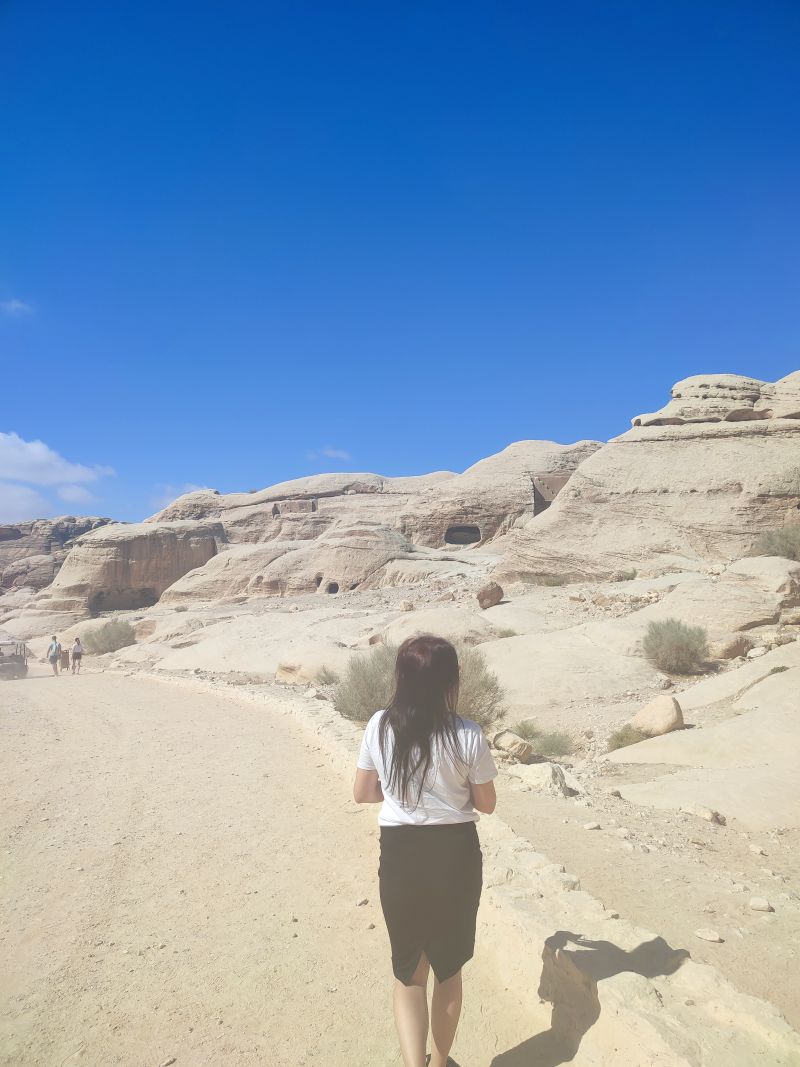
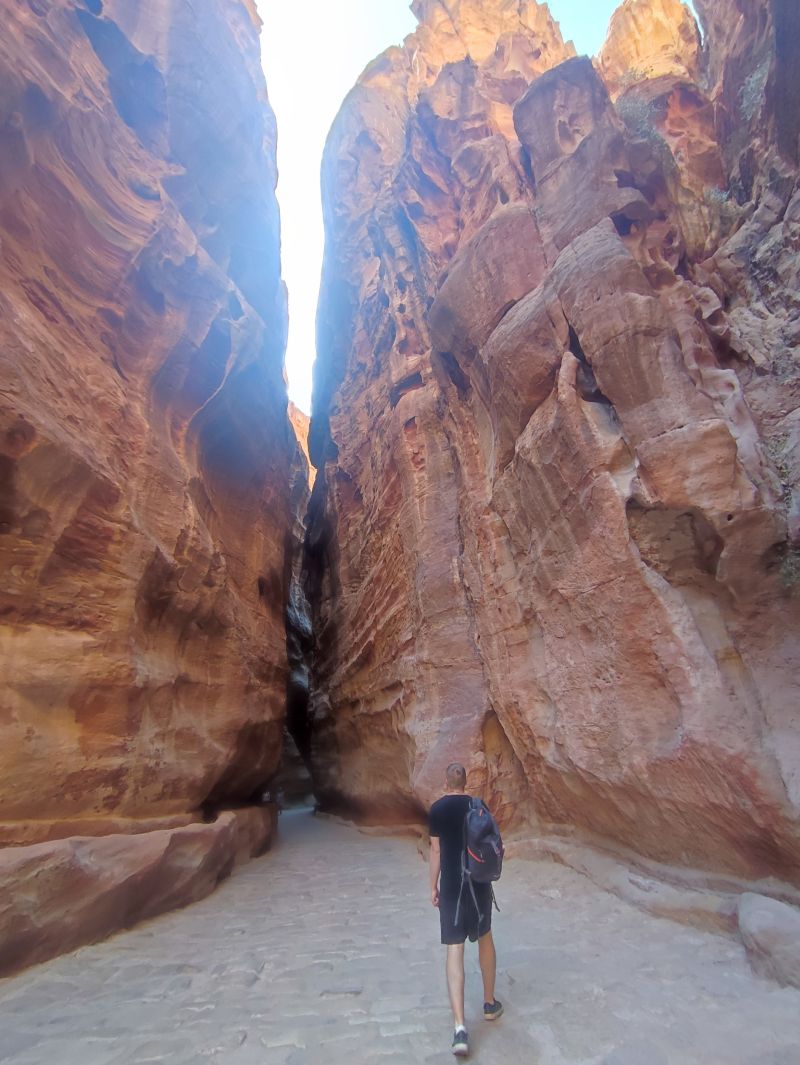
It takes about 1.2 km of walking through this canyon to reach the main attraction — the magnificent Treasury (Al-Khazneh). First it can be seen through a dark slit in the rocks that gets even narrower at the end. And then we left this labyrinth to admire the Treasury. There were so many people already in front of it! It’s not a surprise at all, considering the scale of this attraction — as we were walking toward the Treasury we passed people from time to time, and then, once we reached the Treasury itself, there was a crowd.
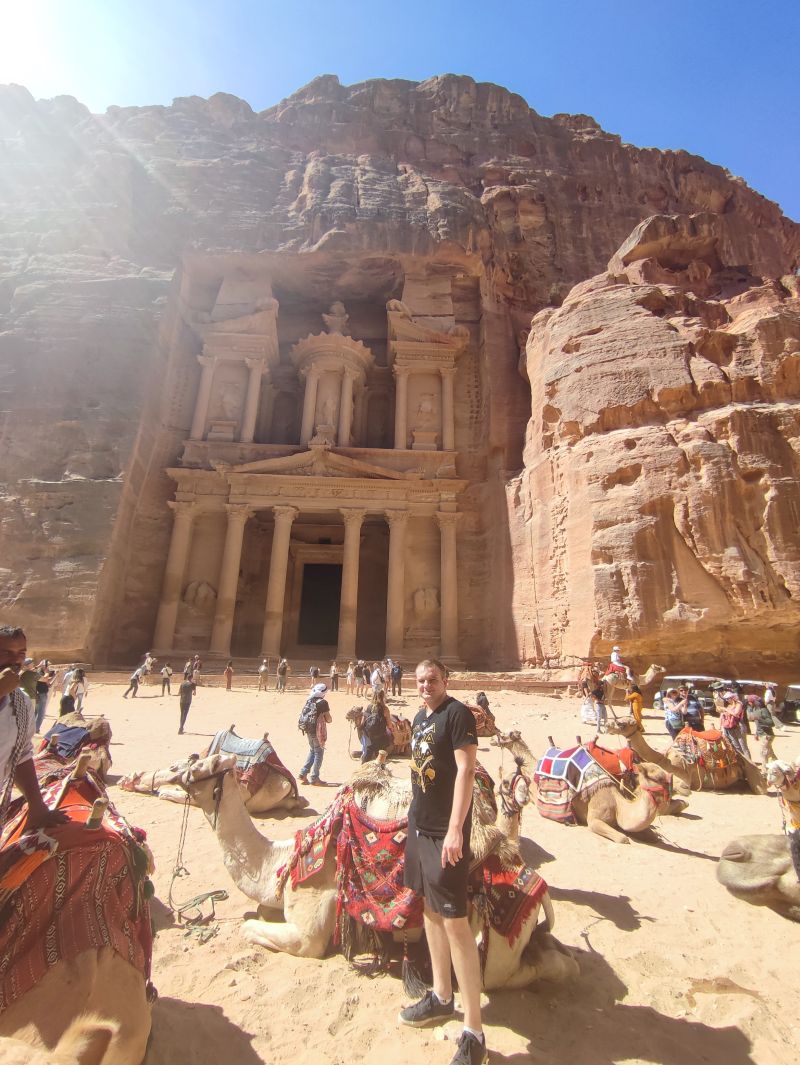
Treasury Viewpoint
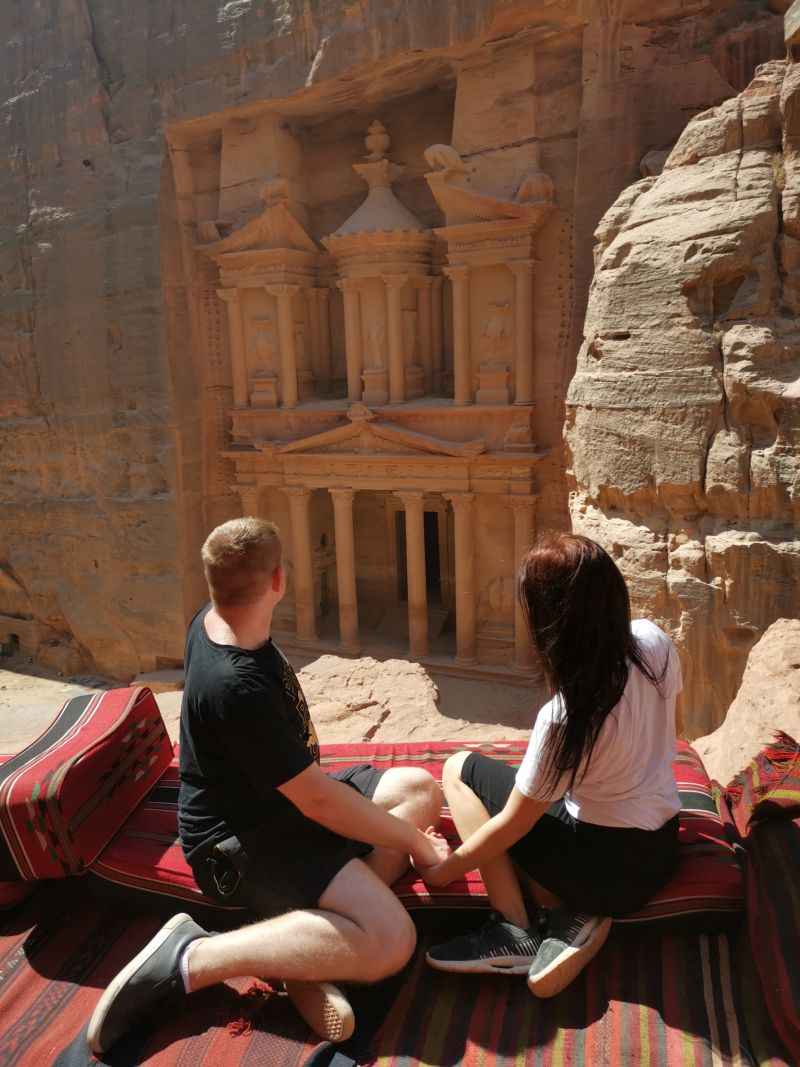
It’s worth going to see the Treasury from the famous viewpoint (again, comfy shoes are a must), as there is a little bit of climbing involved. Many Bedouins wait for tourists around the treasury and offer to take you there and take some photos. It’s a good idea to use their service — they can show you the way and take pictures for a couple of dinars.
Just as we reached the viewpoint, it took our breath away. The treasury looks even more impressive from that point of view, and the viewpoint is nicely decorated with vibrant red Bedouin cushions. It’s a well-known spot from Instagram — many people post photos of themselves sitting on these traditional cushions, looking down at the Treasury, just like us :) To our surprise, there was no crowd or queue for a photo when we got there. I don’t know if we were lucky or if it’s always like this.
Resting in Front of the Treasury: Cafes, Souvenirs & Shade
Right in front of the treasury there is a large square with cafes where you can take a rest. After enjoying the Treasury Viewpoint and all that walking to reach this famous attraction, we decided to order some cold and refreshing drinks and sit down for a while. It’s great because the tables have a view of the treasury, so it’s a perfect place to sit and admire one of the New Seven Wonders of the World peacefully. Although it’s crowded around the Treasury (with camels, donkeys, local guides and tourists all around), it was easy to find an available table. And right next to these cafes there are some souvenir stalls.
After that we headed back the same way and met up with our driver, who had been waiting all this time. He then took us straight to the Wadi Rum Desert.
Wadi Rum Desert — Our Overnight Camp Experience
We booked a one-night stay in the Wadi Rum desert for an unforgettable experience. We were very excited to sleep in the desert and just couldn’t wait for it to happen!
Getting to Wadi Rum From Petra
As I already mentioned, we got to the Wadi Rum desert with our booked driver from Petra. As I remember, it took us a bit less than 2 hours to get to Wadi Rum. At first we were looking out the windows a lot, because it was an incredibly scenic route, but later on we both fell asleep in the car, as we were already tired after all the sightseeing.
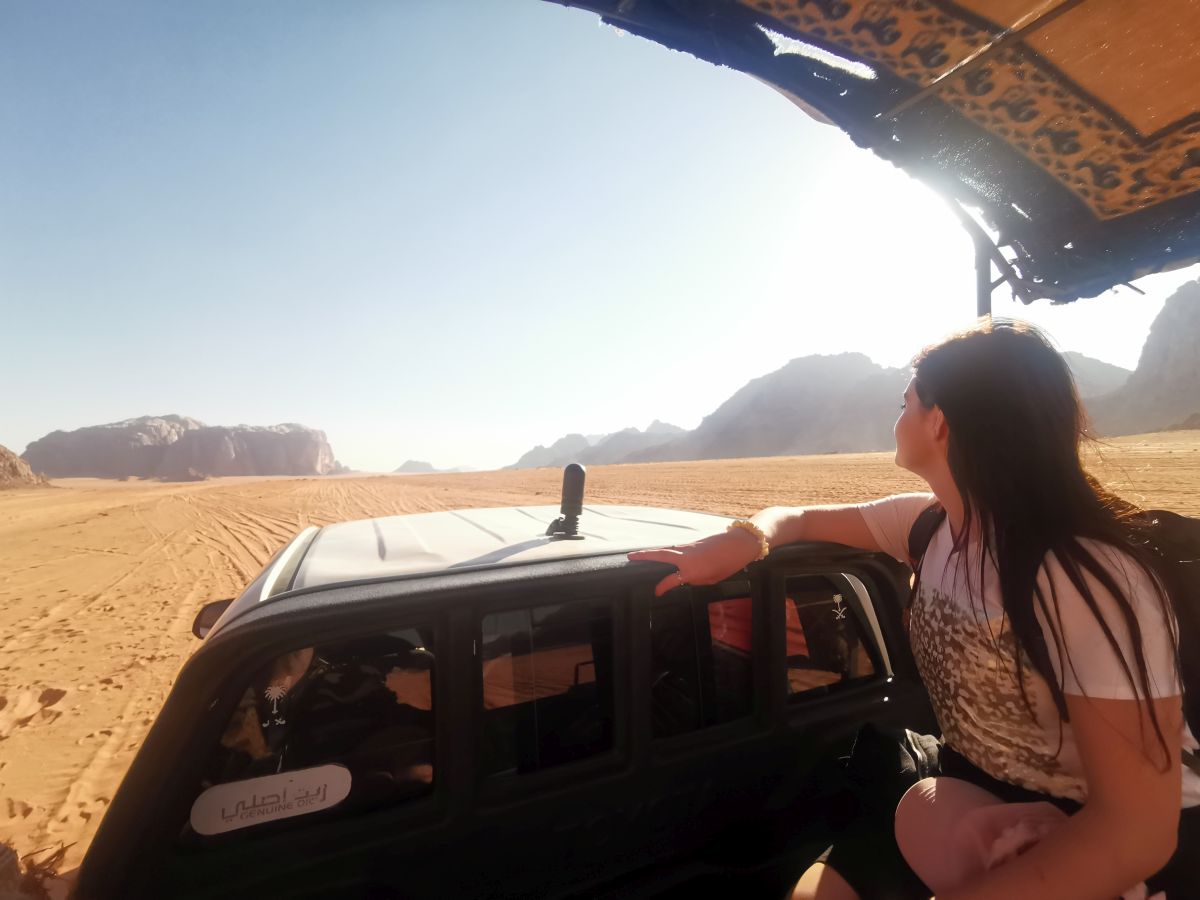
Our driver dropped us off at a reception point just outside the desert. Standard cars cannot drive on the deep sand, so this is where the real adventure begins. From the reception, we were picked up by a local Bedouin guide in an open-back pickup truck. The vehicle had benches in the back under a canopy, looking exactly like a Thai songthaew! Riding in the open back of the truck, with the wind in our hair, speeding through the majestic red sand dunes toward our camp, was an incredible experience. It felt like arriving on another planet — we imagined that landing on Mars would probably look similar :)
Overnight Camp in Wadi Rum: What to Expect
Right after reaching our amazing camp — Wadi Rum Desert Moon Camp — we were accommodated in one of the charming tents belonging to the complex. The camp consists of around 20 tents, standing in a row, surrounded by sandstone cliffs and endless red sand. The tent looked simple inside — 3 beds, bedside tables, air conditioning and a small cabinet with a kettle and cups. We were tired, so we made some tea and went to sit outside on chairs and enjoy the view. The sun was already setting, and it was an exceptional, once-in-a-lifetime experience to watch the sunset in such a setting.


Dinner With the Bedouins: Meat Cooked Underground
A bit after sunset, we went to the on-site restaurant, as we had booked a dinner together with our stay. First, we and all the other guests were invited to sit outside the restaurant. We watched as the chef and kitchen staff unearthed the food, pulling out a multi-level metal rack buried beneath the sand. That meant the whole meal was cooked underground, according to Bedouin tradition. This method is known as Zarb, and it involves slow-cooking meat and vegetables in a buried pit, infusing the food with rich, smoky flavors as it cooks in the natural heat of the desert. Watching them prepare food in the middle of the desert was a true spectacle.
Then everyone was invited into the restaurant to grab food from the open buffet. I can honestly say the food was one of the best meals of our entire trip! Definitely worth a try :)

Sleeping in the Desert: Cold Nights and Starry Sky
After leaving the restaurant, we took a walk toward our tent and stayed outside for a bit. It was already dark, but we wanted to feel the desert at night and watch the starry sky for a while. The mere thought of spending a night in the desert was exciting and gave us a real thrill. We wanted to soak in this moment in peace, and then we went to our tent, as we could feel it starting to get colder already and needed some rest before the next day.
Wadi Rum Desert Tour: What We Saw
The next morning we woke up early for breakfast and got ready for our tour. We didn’t expect it to get so cold at all. We weren’t prepared for that and didn’t have warm enough clothes, so we both set off to explore the desert feeling a bit chilly and shivering slightly :) In October, the month of our visit, mornings can get down to around 5°C to 13°C, which can be a bit of a shock after the hot days.
Our plan was to explore the desert on an open-back pickup truck with our Bedouin guide: the Khazali Canyon, the camp viewpoint, the Little Bridge (also known as Raqabat al Wadak), and the sand dunes.
Khazali Canyon
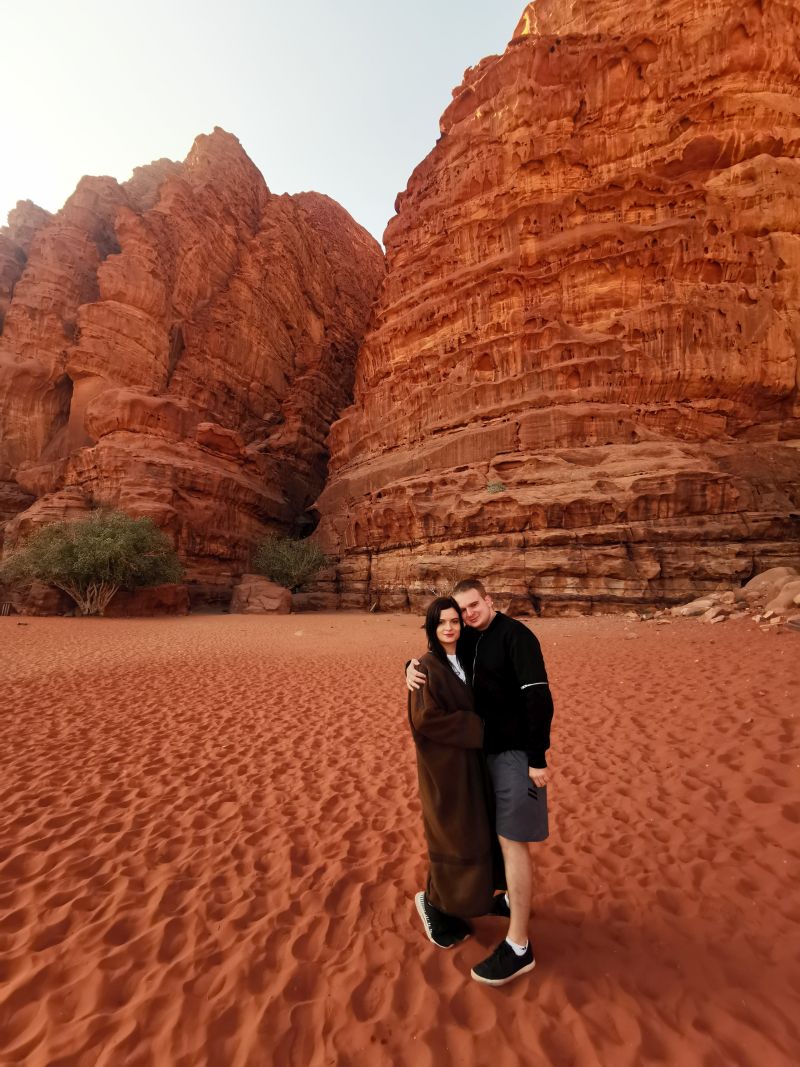
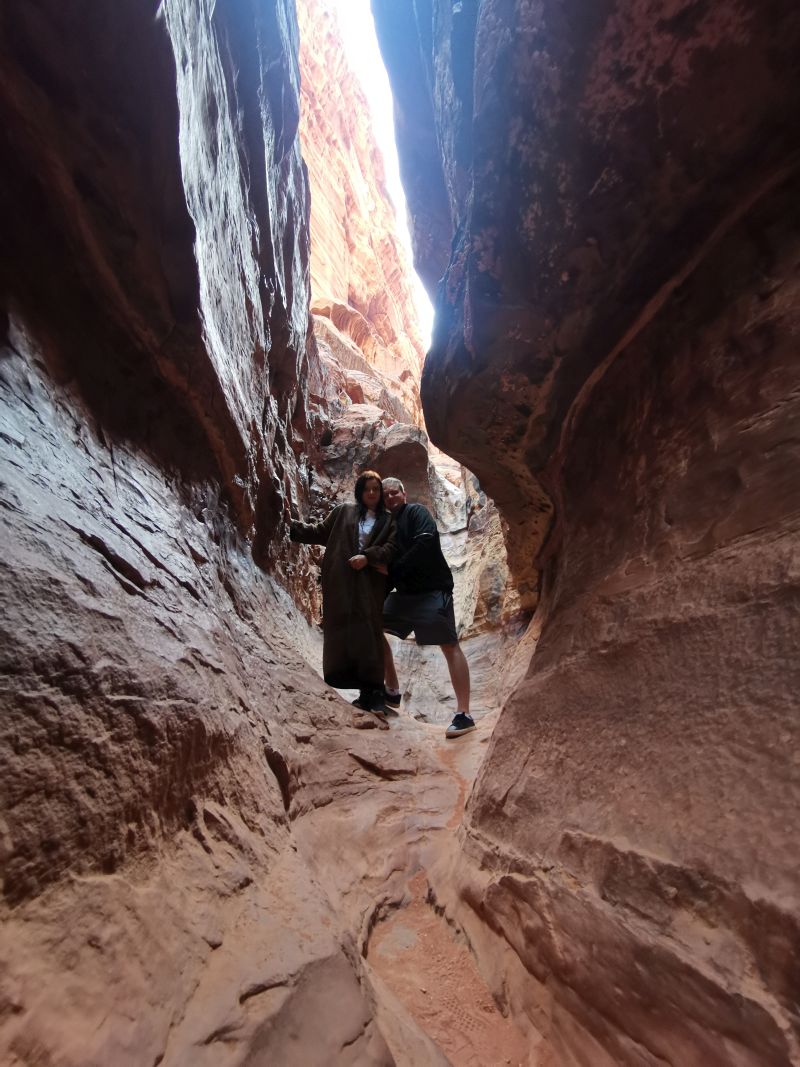
Khazali Canyon was the first stop on our list to explore the desert. It consists of massive rock walls, and we walked toward them. We felt so small in this huge desert, surrounded by these giants. We headed into the rocky passageways with our Bedouin tour guide, who showed us ancient rock art and inscriptions carved thousands of years ago by Nabataean nomads. It felt like stepping into an ancient world, well hidden from current civilisation. The Canyon is beautiful, but it is also full of interesting history we had no idea about before our trip there.
The camp viewpoint
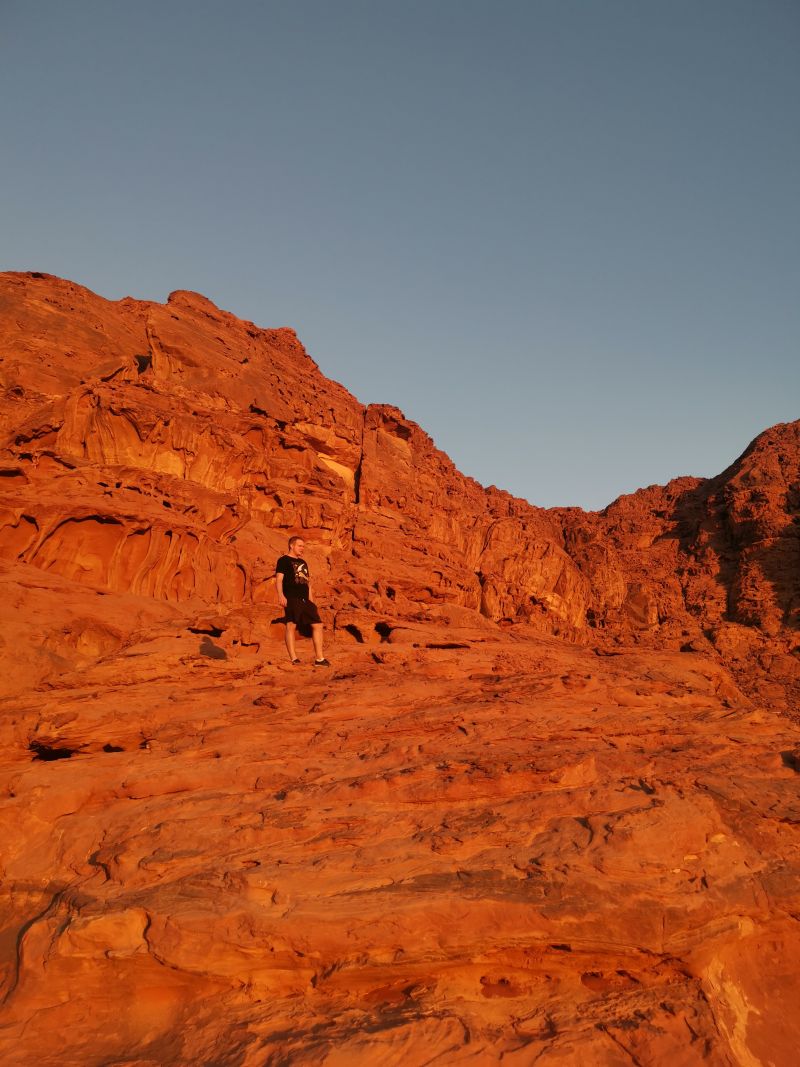
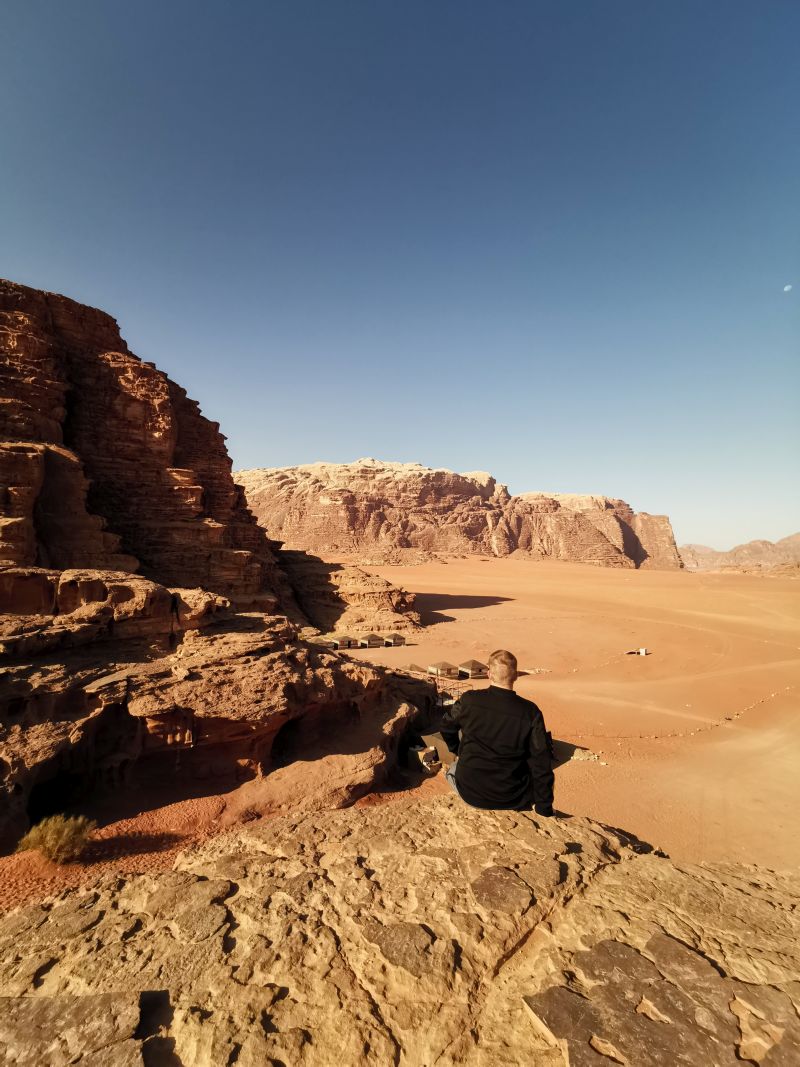
After sightseeing at Khazali Canyon, we climbed the massive sandstone rocks right behind our campsite. We could admire the panoramic view of Desert Moon Camp, where we had stayed the night before. The endless orange sand dune directly opposite the camp looked mesmerizing in the morning sunlight. It took our breath away and made us realize that we had spent the night in the middle of nowhere — right at the top of the world. Exploring places like this makes you forget about everything and just be in the moment. It wasn’t easy to leave this place and move forward with our tour.
The Little Bridge
And here we are: the icing on the cake of things to do in Jordan — the iconic Little Bridge. The span of the bridge is about 4 meters, and climbing to the top was pretty easy. Standing up there, holding hands and looking out over the red sand valley, makes you feel like the king of the world. This natural little bridge makes a huge impression. Honestly, nature can be very creative when forming such wonders. From that point we could observe the monoliths surrounding the desert and take one of the best photos of the entire trip.

Red Sand Dunes
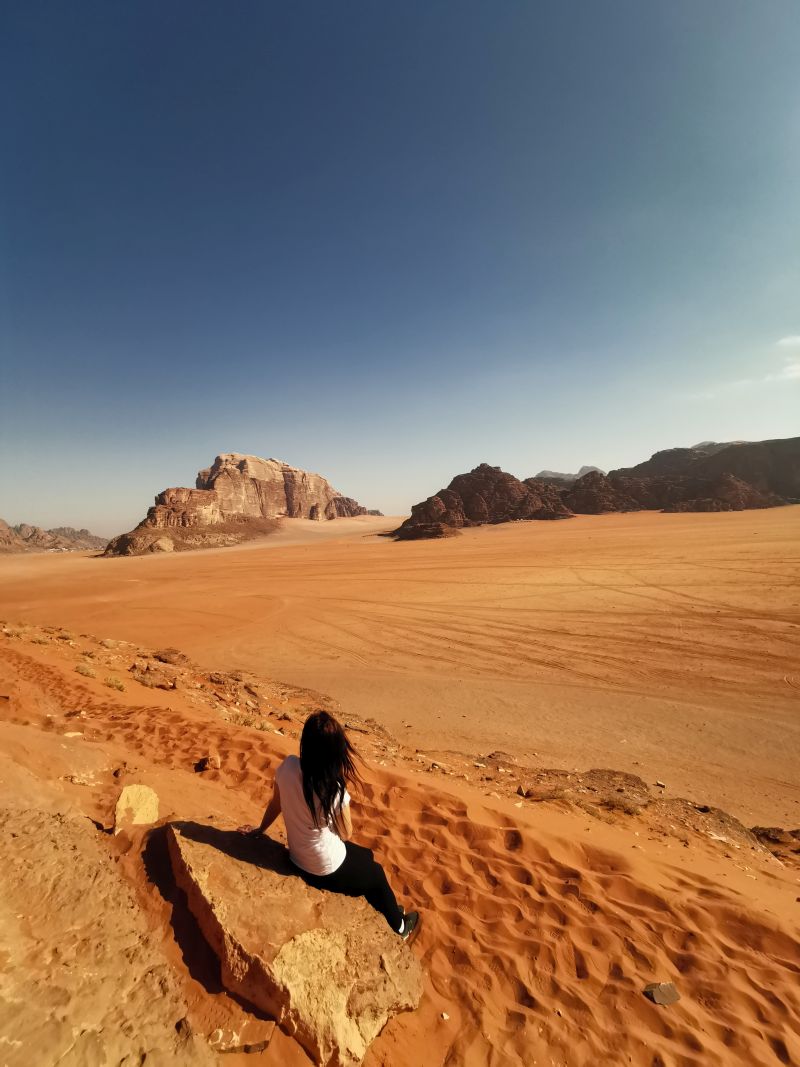
Then the last point was walking up the red sand dunes. It was so much fun and pure joy. I can say we felt like little kids playing in the sand during this activity. However, I have to admit it was also a tough workout, because with every step our feet slid back into the soft, deep sand :) But it was totally worth it! Not only for the joy, but also for the mind-blowing views. We spent some time up on the dunes just talking, sitting and taking photos, and then finally went down.

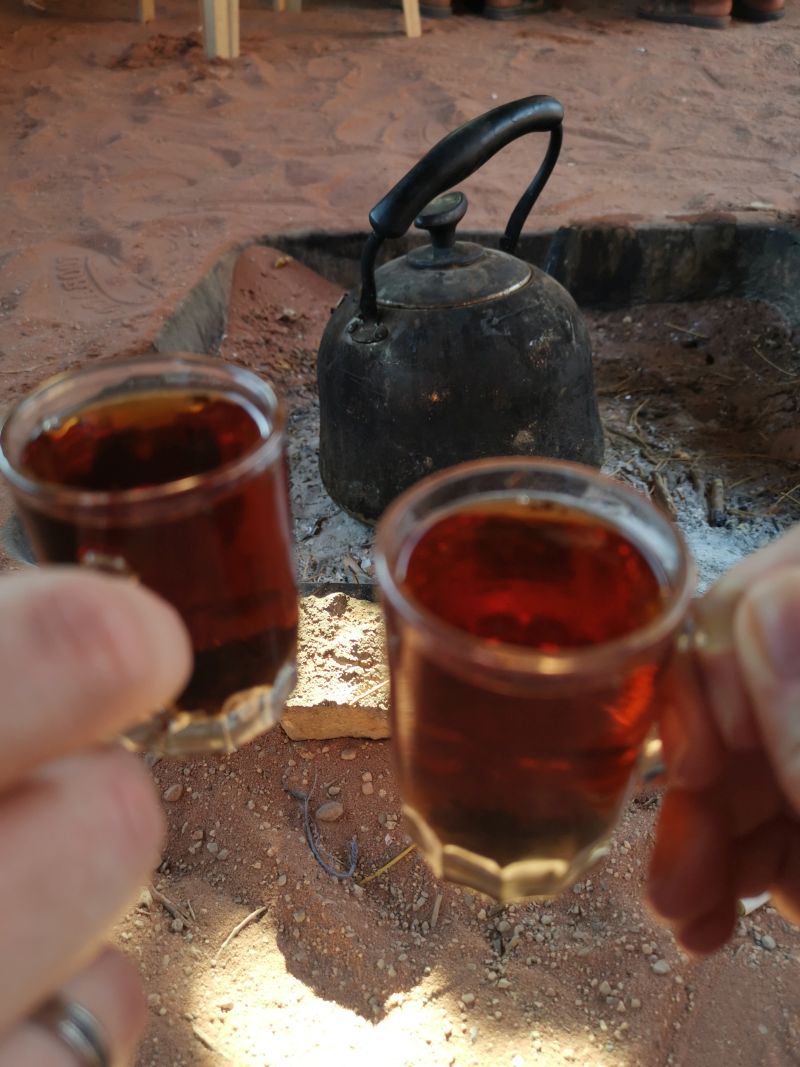
At that point our Bedouin guide invited us into a shaded spot for a hot and delicious Bedouin tea in traditional Arabic tea glasses, known as istikan. Sipping the sweet drink in the quiet of the desert was the perfect way to recover after our climb. It showed us the true, heartwarming hospitality of the Bedouin people.
The Bedouin’s Coat — Our Most Memorable Moment
As I already mentioned, the desert was very cold in the morning and we weren’t well prepared for it. So right at the beginning of our sightseeing, our Bedouin guide lent me his coat. This traditional Bedouin coat is called a farwa. It’s oversized and lined with thick sheepskin or wool. I must admit I could feel its weight — for a coat, it was quite heavy :) Thanks to his kind gesture, I was perfectly warm and cozy while exploring the desert.
And that was the last point of our tour. Our guide brought us back to the reception point just outside the desert. There we were picked up by our taxi driver from before, and we headed to Aqaba by car — our last stop.

Aqaba — The Perfect End to a Jordan Trip
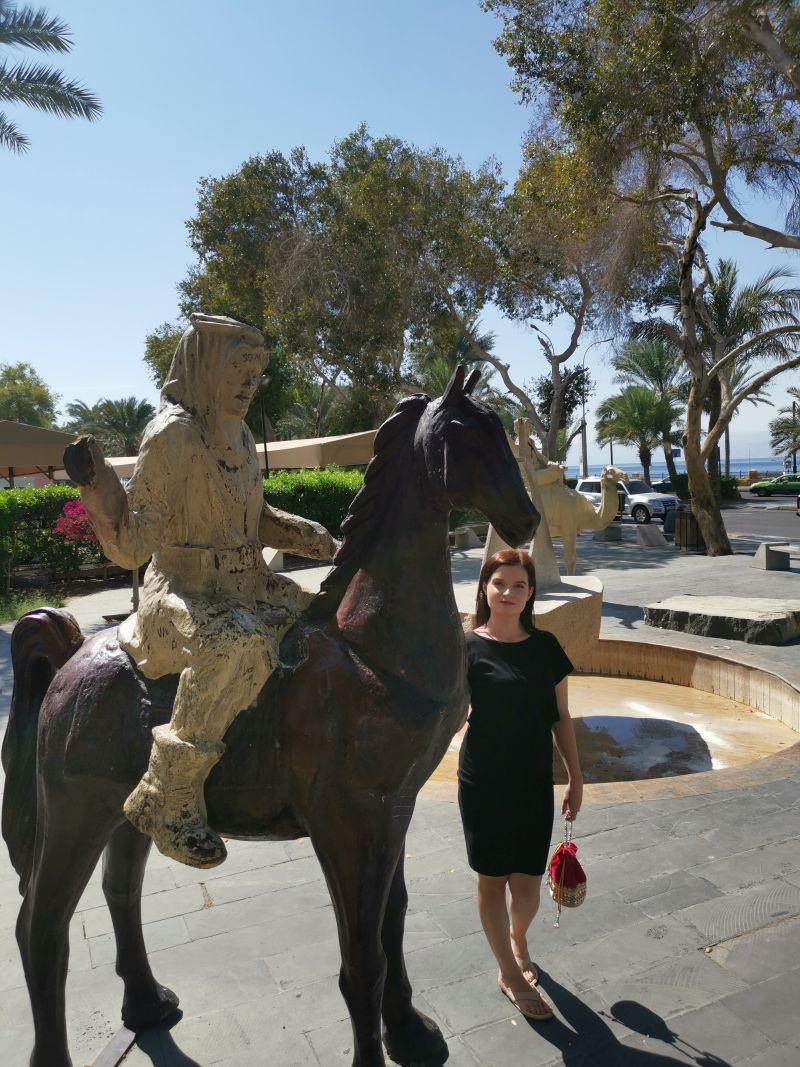
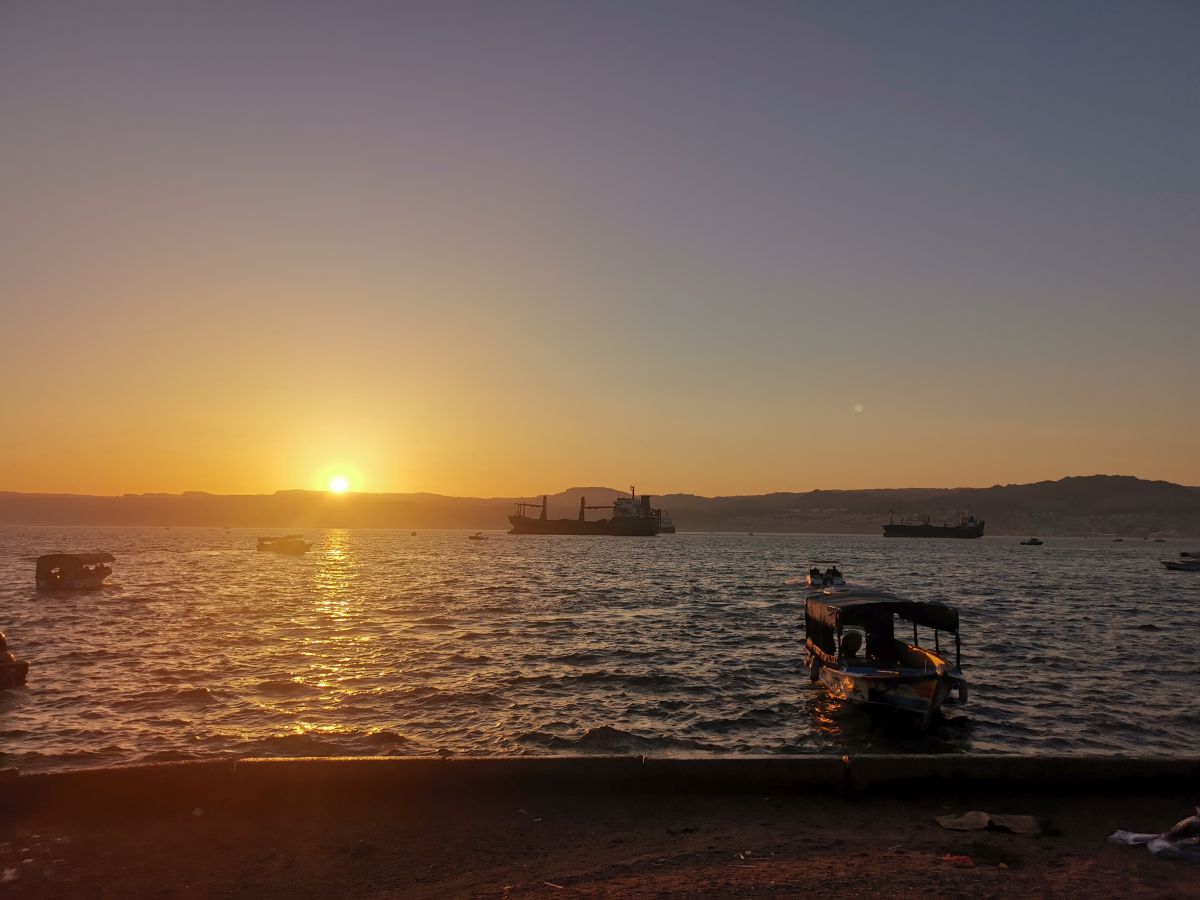
Aqaba was our last stop, and we wanted to rest there. This city is Jordan’s only coastal town. We mostly strolled around or spent time at the beach, sitting by the sea. It was exactly what we needed to recharge our batteries after very intense days of sightseeing. Taking it slow in Aqaba was the perfect, relaxing finale to our unforgettable Jordanian journey.
Jordan 5-Day Itinerary: Day by Day Breakdown
Before the trip, our research turned up many inviting things to do in Jordan. Out of that variety of possibilities, we chose to plan the following 5-day itinerary:
- Day 1: Roman Theatre Amman + Amman Citadel + Amman Old City
- Day 2: Amman Old City
- Day 3: Petra Jordan — The Treasury (Al-Khazneh) + evening and night in Wadi Rum desert
- Day 4: Exploring the Wadi Rum desert: Khazali Canyon, the camp viewpoint, the Little Bridge and red sand dunes
- Day 5: Aqaba — unwinding by the sea
Practical Tips: Visiting Jordan as a Tourist
Here’s a quick cheat-sheet with the attractions from our trip, approximate prices, and the best time to go — based on what we experienced plus up-to-date entry fees at the time of writing (2026). Prices can change, so it’s always worth double-checking before you go.
| Attraction / Cost | Approx. Price (foreigners) | Included in Jordan Pass? | Best Time to Visit |
|---|---|---|---|
| Jordan Pass (Wanderer, 1 day in Petra) | 70 JOD (~98–99 USD) | — | Buy online before arrival |
| Tourist visa on arrival | 40 JOD (waived with Jordan Pass if you stay 3+ nights) | Included with Pass | — |
| Roman Theatre, Amman | ~2 JOD | Yes | Morning, before the heat builds up |
| Amman Citadel | ~3 JOD | Yes | Late afternoon, for panoramic views and sunset light |
| Petra (1-day ticket) | 50 JOD | Yes | Early morning, to beat the crowds and the heat |
| Wadi Rum (entry fee) | 5 JOD | Yes | September–November or March–May (mild days, cool nights) |
| Aqaba | Free to walk around / relax on the beach | — | Anytime, but pleasant year-round thanks to the Red Sea |
When to go: We visited in October and it turned out to be a great choice — warm, sunny days for sightseeing in Amman and Petra, and cool (sometimes surprisingly cold, around 5-13°C) mornings in the desert. Spring (March-May) and autumn (September-November) are generally considered the best seasons in Jordan, since summer gets brutally hot, especially in Wadi Rum and Aqaba.
What to pack: Comfortable, sturdy walking shoes (a must for the Roman Theatre steps, the Petra Siq and the sand dunes), a hat and sunscreen, a reusable water bottle, and — if you’re visiting Wadi Rum in the shoulder season like we did — a warm layer for the early mornings, since it gets much colder than you’d expect after a hot day.
Getting Around Jordan: How We Travelled
To move around different cities of Jordan we booked a taxi driver online before our trip. However, it’s actually super easy to find a taxi driver who can do the same for you and to bargain the price on site. There’s a lot of competition, so I’d assume making a deal locally could work out a bit cheaper.
When we needed to get around Amman, we used the Karem app on our phones to book a car. It worked efficiently, and we never had to wait long for someone to pick us up.
Is Jordan Safe to Visit?
Yes, in our experience Jordan was safe. We walked the streets at night and felt comfortable, never rushing back to the hotel as if it were the only safe place. The people we met in Jordan were nice and helpful, and in general we’d say locals are friendly. Many locals make their living from tourism, and quite a few approached us to offer their services or sell something. However, they always did it politely and not in a pushy way. We even had a couple of situations where we declined their service and they were still interested in a little chit-chat, or even helped us find our way.
Egypt vs Jordan: Which Is Better?
The choice is difficult. If you have the possibility, you should go and see both countries. Both Egypt and Jordan are full of attractions, and we had so much fun visiting them. We enjoyed our experience in both, because they each have world-class things to see.
However, if we try to focus on the differences, I’d start with the food. Although we were lucky in Egypt and didn’t get the “Pharaoh’s curse,” keep in mind that it’s a common problem for tourists there. In Jordan, on the other hand, hygiene standards are higher, and if you stick to bottled water for drinking, you don’t have to worry constantly about getting food poisoning.
When it comes to budget, Jordan is one of the more expensive countries in the Middle East, and prices are much higher than in Egypt. So if budget is an important issue for you, Egypt will be much easier on the pocket and more affordable.
Walking the streets in Jordan felt safer than in Egypt, and locals seemed a bit more friendly and welcoming, but it wasn’t a huge contrast. We could feel the difference, but it’s not a night-and-day type of gap.
Out of the things to do in Jordan that we would never want to skip, we’d pick: Amman with the Roman Theatre and Amman Citadel, the Wadi Rum desert with the Little Bridge, and Petra with the Treasury (Al-Khazneh). And on our must-see list for Egypt, we’d place: the Pyramids and Sphinx of Giza, the National Museum of Egyptian Civilization, and a Nile dinner cruise with belly and Tanoura dance.
FAQ: Things to Do in Jordan
How many days do you need in Jordan?
We spent 5 full days in Jordan and it was enough to see the main highlights — Amman, Petra, Wadi Rum and Aqaba — without feeling rushed. That said, we could easily have stayed longer, especially in Amman, where 2 days felt just a little too short to really soak everything in. If you have more time, we wouldn’t say no to a week or more.
Is Petra worth visiting?
Absolutely, yes. Petra was one of the absolute highlights of our whole Middle East trip. Walking through the Siq and getting that first glimpse of the Treasury through the narrow rock slit is a moment we won’t forget. One day was enough for us to see the Treasury and its viewpoint, but if you want to explore Petra more thoroughly (there’s much more beyond the Treasury), staying overnight nearby is probably worth it.
Is Wadi Rum worth an overnight stay?
100%, we’d say it’s a must. Sleeping in a Bedouin camp, watching the sunset over the dunes, having dinner cooked underground (Zarb) and then waking up to explore Khazali Canyon and the Little Bridge was one of the most memorable parts of our whole trip. Just be prepared — mornings can get surprisingly cold, even after a hot day before.
Can you do Petra as a day trip from Amman?
Yes, we did exactly that. We booked a driver in advance, left our hotel in Amman early in the morning, and reached Petra in about 3 hours. It’s a long day, but it’s absolutely doable, and we felt our visit was complete even without staying overnight in Petra.
Is Jordan safe for tourists?
In our experience, yes, very much so. We walked around Amman’s Old Town in the evening and never felt unsafe. Locals were kind, helpful and respectful, even the ones trying to sell us something.
What is the best time to visit Jordan?
We visited in October, and it worked out well — warm days for sightseeing in Amman and Petra, though the desert mornings in Wadi Rum were surprisingly cold. Spring and autumn are generally the most comfortable seasons to visit, since summers can get very hot, especially in Wadi Rum and Aqaba.
How much does Petra cost to enter?
A single-day ticket costs 50 JOD if bought at the gate, but we’d strongly recommend getting the Jordan Pass instead — it costs 70 JOD, already covers Petra, and also includes your tourist visa fee plus entry to 40+ other attractions across the country.
Is Jordan good for families with kids?
We travelled without kids back then, so we can’t speak from personal experience, but based on what we saw, Jordan seemed very family-friendly — safe streets, helpful locals, and plenty of kid-pleasing spots (Aima Ice Cream Restaurant in Amman would honestly be a paradise for children). Just keep in mind that some activities, like the full Petra walk or a night in the desert, can be demanding for younger kids.
Final Thoughts on Visiting Jordan
To say that we enjoyed our stay in Jordan wouldn’t be enough — we simply loved it! As I said, 5 days there are enough to see the main attractions, but if you extend your visit, it definitely won’t be a waste of time. There are so many wonderful things to do in Jordan that it’s impossible to get bored there. The culture, history, food, local people and world-class sites are definitely worth the trip! Jordan is the kind of place that, once visited, stays in your heart forever :)
Have you been to Jordan, or is it on your bucket list? Which part of our trip would you most want to experience yourself — Petra, a night under the stars in Wadi Rum, or lazy days in Aqaba? Let us know in the comments below! 👇